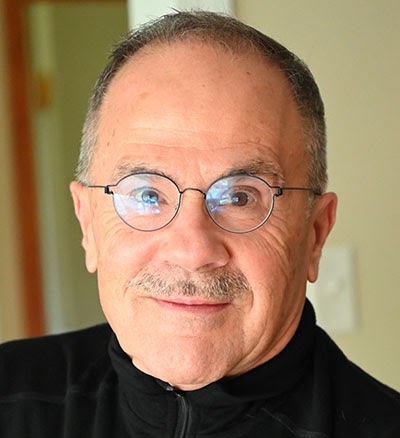
Eleftherios “Terry” Papoutsakis
Principal Investigator · Unidel Eugene DuPont Chaired Professor of Chemical & Biomolecular Engineering; Professor, Biological Sciences
Terry Papoutsakis is a pioneer of metabolic engineering whose work spans microbial and mammalian-cell biotechnology, leading both research teams in the group.
Biography
Eleftherios (Terry) Papoutsakis is the Unidel Eugene DuPont Professor at the Dept. of Chem. & Biomolecular Engineering at the University of Delaware. Papoutsakis has made important contributions in both microbial and animal-cell biotechnology. Animal-cell biotechnology includes seminal work on mixing and agitation in cell-culture bioreactors, cellular metabolism, and metabolic and glycosylation models. As well as work on stem-cell bioengineering and the use of extracellular vesicles for applications in cell and gene therapies. Microbial biotechnology work includes contributions in clostridia genetics and metabolic engineering with emphasis recently in syntrophic co-cultures for CO2 co-utilization with carbohydrates to achieve supra-physiological product yields.
He was elected to National Academy of Engineering (NAE), the American Academy of Microbiology (AAM), the National Academy of Inventors (NAI) & the International Academy of Medical & Biological Engineering (IAMBE), and Fellow of ACS, AIChE, AAAS, and AIMBE. He has received numerous awards, including the 2022 William Walker Award (the senior award of the Amer. Institute of Chemical Engineers, AIChE), the 2020 Amer. Soc. for Microbiology (ASM) National Award in Applied Biotechnology, the 2017 Amer. Chemical Society (ACS) E. V. Murphree Award in Industrial & Engineering Chemistry, the 2013 DIC Wang for Excellence in Biochemical Engineering (SBE/AIChE), the 2012 James E. Bailey Award (SBE/AIChE), the 2010 Metabolic Engineering Award, the 2005 Amgen Biochemical Engineering Award, the 2004 Merck Cell Culture Engineering Award & the 2003 Alpha Chi Sigma AIChE Award.
He received his BS from the National Technical University of Athens & his MS/PhD from Purdue University. He has supervised in research over 75 PhD, 30 MS, 35 postdoctoral and 85 undergraduate students, funded by over $60 million in grants from NSF, NIH, DOE, ARPA-E, ONR & ARO.
- 325 refereed publications
- Google Scholar: >30,000 citations · h-index 101
- Web of Science: >22,500 citations · h-index 89
Career
- Professor, Biological Sciences · University of Delaware (2011–present)
- Unidel Eugene DuPont Chair & Professor, Chemical & Biomolecular Engineering · University of Delaware (2007–present)
- Walter P. Murphy Professor, Chemical & Biological Engineering · Northwestern University (2001–2007)
- Professor, Interdepartmental Biological Sciences Program · Northwestern University (1996–2007)
- Member, Lurie Comprehensive Cancer Center · Northwestern University Medical School (1994–2007)
- Professor, Chemical & Biological Engineering · Northwestern University (1990–2007)
- Associate Professor, Chemical Engineering · Northwestern University (1987–1989)
- Associate Professor, Chemical Engineering · Rice University (1985–1987)
- Assistant Professor, Chemical Engineering · Rice University (1980–1985)
Education
- Ph.D., Chemical Engineering · Purdue University (1979)
- M.S., Chemical Engineering · Purdue University (1977)
- Diploma (B.S./M.S.), Chemical Engineering · National Technical University of Athens (1974)
Training & Mentoring
- 70 Ph.D. and 28 M.S. students graduated, with 9 Ph.D. students in progress
- 39 postdoctoral researchers and 99 undergraduate researchers supervised
- Initiated and directed, for 10 years, the NIH Predoctoral Biotechnology Training Program at Northwestern University, and participated in 4 other NIH training programs there
- Participant in the NIH Chemistry-Biology Interface (CBI) training program at the University of Delaware
- Sponsor of 4 individual NIH NRSA postdoctoral fellows
Research
My lab works on two areas of modern, molecular biotechnology and synthetic biology: higher eukaryotic biology & biotechnology now with emphasis on cell and gene therapies of the hematopoietic system, and microbial biotechnology, now with emphasis of fundamental cell-to-cell interactions of complex multicomponent systems including those of the human microbiomes.
Eukaryotic biotechnology includes work in hematopoietic stem-cell differentiation, understanding of stem-cell development and clinical applications, experimental culture and assay methods, including flow cytometry and advanced microscopy methods, as well as genetic and genomic tools and experimental animal studies for examining the development of human stem and progenitor cells. A focal area is the biology of cellular microparticles and synthetic bio-nanoparticles, megakaryopoiesis, in vitro platelet production, and use of megakaryocytic microparticles for cell therapies and cargo delivery to stem cells.
The microbial biotechnology activities encompass biotechnologies of both solventogenic and acetogenic clostridia, non-phototrophic CO2 fixation, E. coli-based synthetic methylotrophy, and synthetic syntrophic co-cultures. An area of current interest is the study of complex microbial interactions under syntrophic conditions that give rise to previously unknown phenomena including heterologous cell fusion and the intercellular exchange of proteins and nucleic acids via naturally releases prokaryotic extracellular vesicles. The focus pertains to microbiomes of humans and animals but also environmental microbiomes.
The two areas of research, although seemingly orthogonal, are complementary and synergistic in development of tools and strategies and benefit each other.
Honors & Awards
Elected academies & fellowships
- Hagler Fellow, Hagler Institute for Advanced Study, Texas A&M University · 2024
- Elected to Sigma Xi, the Scientific Research Honor Society · 2023
- Elected Fellow, National Academy of Inventors (NAI) · 2021
- Elected Fellow, International Academy of Medical & Biological Engineering · 2021
- Elected to the National Academy of Engineering (NAE) · 2018
- Honorary Life Member, European Society for Animal Cell Technology (ESACT) · 2017
- Fellow, American Institute of Chemical Engineers (AIChE) · 2014
- Elected Fellow, American Chemical Society (ACS) · 2011
- Fellow, American Academy of Microbiology (AAM) · 2005
- Elected Fellow, American Association for the Advancement of Science (AAAS) · 1998
- Founding Fellow, American Institute of Medical & Biological Engineers (AIMBE) · 1993
Awards & named lectures
- William H. Walker Award, American Institute of Chemical Engineers (AIChE) · 2022
- Charles Thom Award, Society for Industrial Microbiology & Biotechnology (SIMB) · 2022
- American Society for Microbiology (ASM) National Award in Biotechnology · 2020
- Inaugural Nazmul Karim Lecture, Texas A&M University · 2019
- E. V. Murphree Award in Industrial & Engineering Chemistry, American Chemical Society (ACS) · 2017
- AIChE Division 15 Distinguished Service Award · 2016
- D.I.C. Wang Award for Excellence in Biochemical Engineering, SBE/AIChE · 2013
- James E. Bailey Award for Biological Engineering, SBE/AIChE · 2012
- International Metabolic Engineering Award · 2010
- Elmer Gaden Award, Biotechnology & Bioengineering (John Wiley & Sons) · 2010
- James M. Van Lanen Distinguished Service Award, ACS BIOT Division · 2007
- Amgen Biochemical Engineering Award, Engineering Conferences International (ECI) · 2005
- Merck Cell Culture Engineering Award, Engineering Conferences International (ECI) · 2004
- Alpha Chi Sigma Award, American Institute of Chemical Engineers (AIChE) · 2003
- Marvin Johnson Award, ACS Biochemical Technology (BIOT) Division · 1998
- Bayer Lecturer in Biochemical Engineering, University of California, Berkeley · 1997
- Outstanding Chemical Engineer, Purdue University · 1997
- Food, Pharmaceutical & Bioengineering Award, AIChE · 1995
- Presidential Young Investigator Award, National Science Foundation (NSF) · 1985–1990
Editorial roles & service
Editor positions
- Associate Editor, Science Advances (Science/AAAS) · 2018–present
- Consulting Editor, AIChE Journal · 2013–present
- Editor, mBio (American Society for Microbiology) · 2016–2025
- Editor, Current Opinion in Chemical Engineering · 2012–2016
- Editor, Biotechnology Advances (Elsevier) · 2011–2016
- Guest Editor, Current Opinion in Biotechnology · 2014–2015
- Associate Editor, Biotechnology & Bioengineering · 1996–2002
- Editor in Chief, Biotechnology & Bioengineering · 1990–1995
Editorial boards
- Annual Review of Biomedical Engineering · 2021–present
- Applied & Environmental Microbiology (ASM) · 2017–present
- Applied Microbiology & Biotechnology (Springer) · 2016–present
- Biofuels (Future Science) · 2010–present
- Biotechnology & Bioengineering (Wiley) · 2003–present
- Journal of Biotechnology (Elsevier) · 2000–present
- Metabolic Engineering (Elsevier) · 1998–present
Recent service
- Board of Reviewers, Danish Advanced Research Academy (DARA), Novo Nordisk Foundation · 2025–
- Selection committee, Gregory Stephanopoulos SBE/IMES Award in Metabolic Engineering · 2025–
- Committee for the Russ Prize, National Academy of Engineering · 2024–
- DOE BETO review panels · 2019–
- Chair, Innovation Award Committee, European Society for Animal Cell Technology (ESACT) · 2018–
- Board of Managers, International Metabolic Engineering Society · 2016–
Member of ASM, ACS, AAAS, AIMBE, SBE, AIChE, ESACT, IMES, SIMB, Sigma Xi, the International Academy of Medical & Biological Engineering, and NAI.